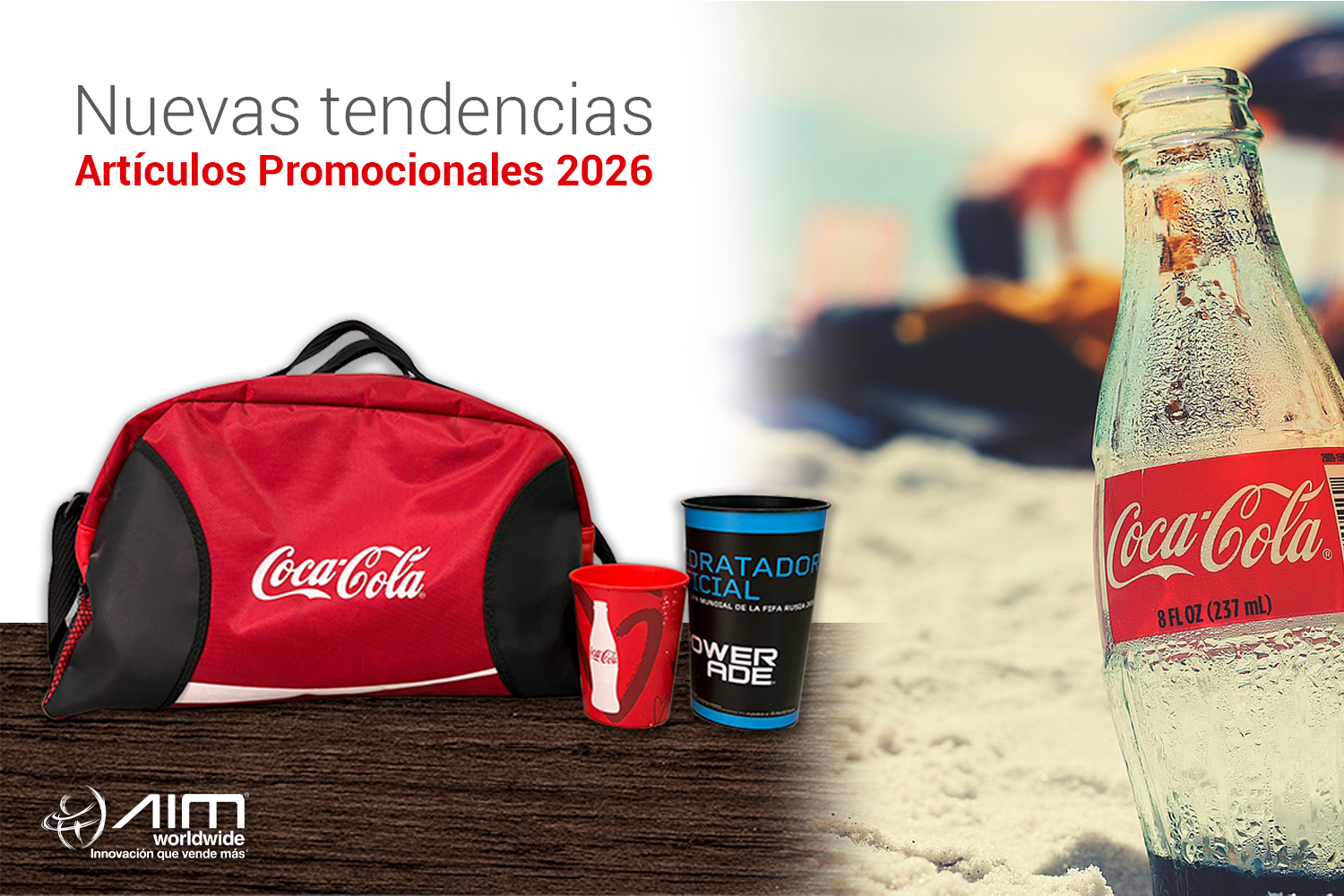




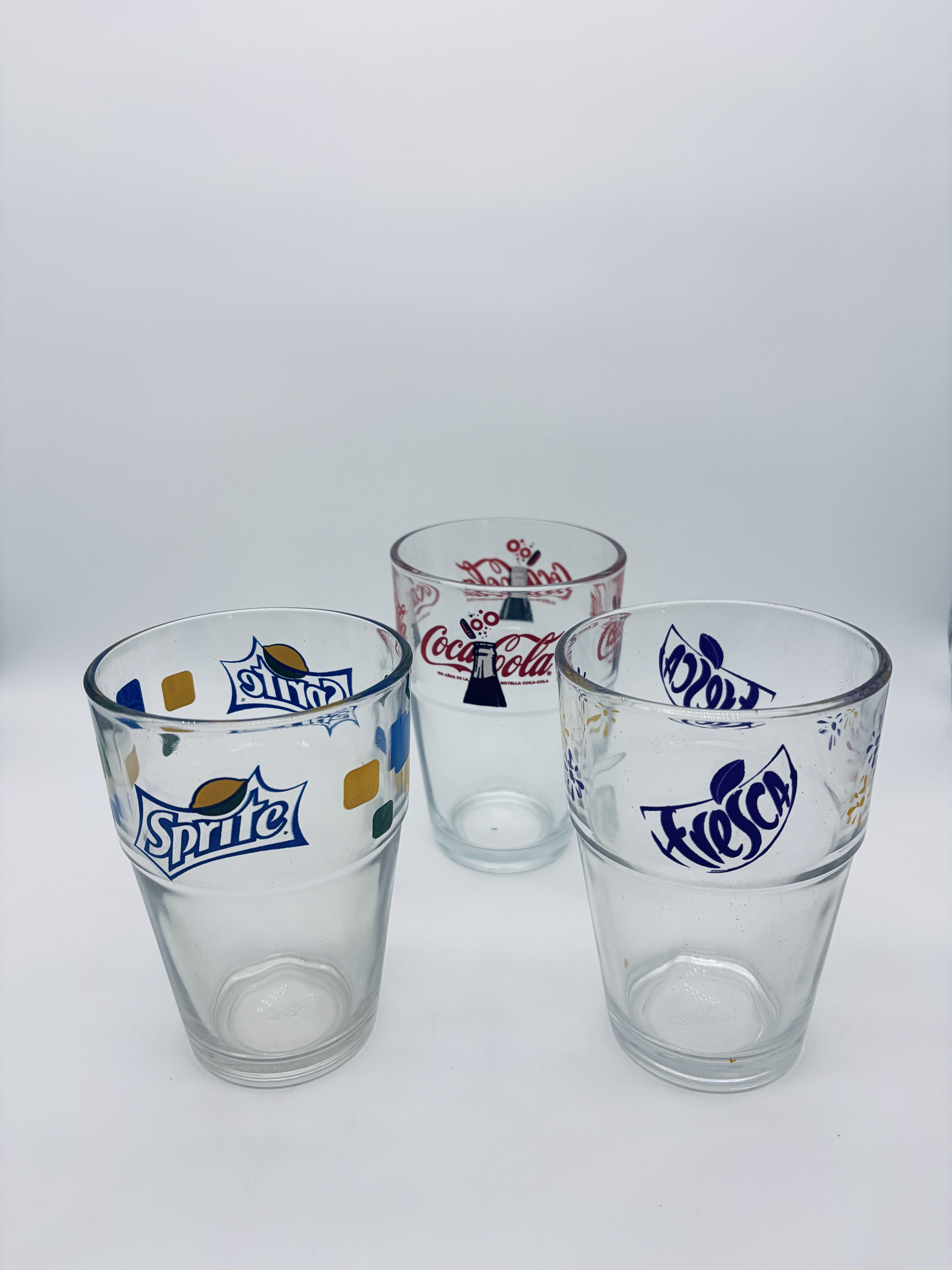
Few promotional items have the track record and staying power of the glass cup. Decades after the first collectible editions of Coca-Cola, Sprite, and Fresca reached Mexican cupboards, the format remains one of the most effective in the point-of-sale catalog. The reason is simple: a well-designed glass cup doesn't get thrown away — it gets used every day, and every time it's used, it keeps working for the brand.
Far from being a nostalgic category with no future, the collectibles business is in full expansion. The global collectibles market reached $304.5 billion in 2024 and is projected to reach $469.9 billion by 2032, growing at a compound annual rate of 5.5% (Espinoza, 2025). The branded glass cup has been one of the quiet stars of that phenomenon for years.
The most recent and visible example of this dynamic in Mexico was the launch of Coca-Cola's holiday villages at Walmart, where limited availability set off a buying frenzy, with comments like "only 3 out of 5 arrived" and "I grabbed 4 to give as gifts" (Espinoza, 2025). That same principle of planned scarcity and the desire to collect is what has sustained the success of branded glass cups on the Mexican table for more than a century. A NielsenIQ study reveals that 34% of urban consumers are constantly seeking new products, while 40% prioritize innovation when choosing a brand (Espinoza, 2025) — the collectible cup responds exactly to that appetite, at a fraction of the investment required by other merchandising categories.
The same dynamic shows up in more recent formats. Coca-Cola has brought cup collecting to new generations with movie-theater editions built around Mexican colloquial slang — "mijo," "amix," "chido" — which generated an immediate response on social media for their cultural closeness (Merca2.0, 2025). In sports marketing, the brand has also bet on thermosensitive cups that change color on contact with cold drinks, blending the nostalgia of the classic soccer cup with an innovation that went viral on TikTok and Instagram (iProfesional, 2026). The message is consistent: the glass cup remains fertile ground for brand innovation, not just tradition.
Beyond the collecting phenomenon, glass cups carry structural advantages that other materials simply don't match. It's a high-quality material that ensures durability, is dishwasher safe, doesn't absorb odors or flavors, and can be engraved or printed with a brand's logo without losing its elegance (Cosmos Online, n.d.). It functions, at once, as a practical everyday tableware item and as a display piece the consumer holds onto for years.
AIM Worldwide's own portfolio is proof of this. The glass cup collection developed for Coca-Cola — made of thick, durable glass, with a base insert featuring the contour bottle design — was distributed through Modern Trade alongside a family-size six-pack of soda, reached more than 100,000 Mexican households, and was received as a collectible, eye-catching, and long-lasting promotional product (AIM Worldwide, n.d.). That's exactly the result any brand wants from investing in this category: a cup that stays in the cupboard long after the promotion has ended.
Part of the glass cup's appeal over other promotional materials lies in the variety of decoration techniques available, each shaping how the consumer perceives the quality of the piece in a different way. Ceramic enamel, fired at high temperature, produces a finish that doesn't fade with repeated washing or with the passage of years — it's the same technique that has allowed vintage Coca-Cola, Fresca, and Sprite cups to still circulate today as collectible pieces in perfect condition. Multi-color screen printing allows for more detailed and colorful illustrations, ideal for series with different characters or scenes, like the ones developed for Lala or Electrolit. Base engraving or an inset detail, meanwhile, adds an extra layer of sophistication: it's a detail the consumer discovers while using the cup, not while buying it, and it communicates craftsmanship without occupying visual space on the body of the piece.
Choosing the technique isn't just aesthetic — it's strategic. A brand looking for a cup with a long shelf life and a long life in the home — as is often the case with sodas and bottled water — benefits more from ceramic enamel because of its resistance. A brand looking to build a visually rich, quickly collectible series — as happens with seasonal launches or limited editions — can get more out of multi-color screen printing. And a brand looking to stand out on a shelf crowded with similar cups finds in the base insert an inexpensive way to differentiate itself without redesigning the entire piece.
Part of the glass cup's strength as a promotional item is its versatility of formats, and that's where AIM's recent summer work makes the case clearly.
Shot glass kits. Small, high-turnover formats, ideal for spirits and flavored soda brands. The proposals developed for Squirt and for Tequila Herradura show how a 60ml glass can become a four-piece collectible set with seasonal edition packaging, perfect for both gifting and point of sale.
Collectible cup series. The format that best taps into the Mexican consumer's collecting instinct. The series developed for Lala and for Electrolit — each with four distinct designs under a single summer concept — invite the consumer to complete the set, driving repeat purchases and giving them a concrete reason to buy the brand again.
Stackable cups. An elegant solution to the shelf and logistics challenge. The development for Bonafont solves that problem with a three-piece stackable system that also completes a single illustration when the pieces are stacked, turning the packaging itself into part of the visual experience.
Conical and high-volume cups. Versatile formats for brands seeking greater shelf presence, like the proposals developed for Tajín and Monster Energy, with capacities up to 650ml and illustrations that cover the entire surface of the glass.
Not all glass cup formats pursue the same objective, and choosing well from the start of the project saves both time and budget. If the goal is to build loyalty and repeat purchases over a season, the collectible series format — like the one developed for Lala or Electrolit — works best, because it turns every additional purchase into a step toward completing the collection. If the goal is to reinforce brand presence during a specific consumption moment, such as a family meal or a gathering, the Bonafont-style stackable cup solves both the home storage challenge and the shelf display challenge. If the goal is to activate a spirits or flavored-drink category in a social consumption channel, shot glass kits like those for Squirt or Herradura offer the lowest cost per unit with the highest gifting potential. And if the goal is to maximize visual brand impact in a single stroke, without needing a collecting mechanic, high-volume conical cups like those for Tajín or Monster Energy are the most direct choice.
What sets the glass cup apart from other promotional items is that it doesn't compete for the consumer's immediate attention — it competes for a permanent spot in their kitchen. Every time that cup is used to hold water, soda, or iced coffee, the brand appears again without the brand having to spend a single additional peso on that impression. It is, quite literally, recurring, free advertising after the initial purchase.
For any brand — in beverages, food, or retail — looking for a piece with collecting potential, daily presence in the Mexican home, and format flexibility, the promotional glass cup remains, in 2026, one of the most solid bets in the catalog.
Know more about our glass cups.
.png)